For this show and tell assignemnt I created another art piece. This is inspired by the traditional Japanese art style, ukiyo-e and an interpretation of Mario fighting Bowser (video game characters). I was influenced by Jed Henry’s ‘Rickshaw Cart’ Woodblock Print. My image depicts Mario as a ninja and Bowser as a dragon with a shell. I have drawn dragons in the past, so I did not use a specific refernce other than the print above for color choice and the generic build of the shell and face. For Mario, I heavily relied on the reference for the design and coloring, but I completely changed the scene and incorperated fire and a simplistic background. The dragon is blowing fire at the ninja, as he tries to protect himself with a shield. Ukiyo-e often incorporates symbolic elements to enhance the narrative and visual impact of the prints. These symbols are integrated in this scene of Mario and Bowser, which deepens their meaning. I did this by transforming Bowser, who is a personified turtle, into a dragon. He already breathes fire, so I thought that this was very fitting for him and in turn this dragon-form truly emphasizes his imposing nature. Jed Henry’s print has Mario drawn as a ninja, so I did the same. As a ninja, this represents Mario’s fleeting nature of his his adventures. Ninja’s usually fight and guard their superiors, typically to protect the Edo Castle, and Mario fights and protects Princess Peach (i.e. they are one in the same). By adapting these iconic characters, Mario and Bowser, into the ukiyo-e style, there blossoms an interesting merge of contemporary video game culture and traditional Japanese art. The fusion of Mario abd Bowser’s recognizable features with the delicate linework, vibrant colors, and storytelling elements of ukiyo-e creates a visually captivating and culturally rich art piece. I used orange, red, green, and blue hues to bring this scene to life. I centered the focus to Bowser’s fire and the action of Mario fighting back with the shield, which intensifies a dramatic type of vibe. Bowser has a powerful stance, displaying the strengh this protagonist has, while also breathing fire that I drew with a detailed pattern of linework, which is found in many ukiyo-e prints (like waves or clouds). Ukiyo-e is a popular art form during the Edo period of Japan and with the rise of wealthy merchants and growth of urban culture, this art stlye enhances the “floating world”, or ukiyo, representing simplicity of life: entertainment, fashion, and theater. These prints were affordable, making them accessible to a wide audience. The tales of Mario would be a great story to tell through traditonal Japanese theatre, as it incorperates a colorful and mesmerizing aspect of an adventure with a ninja fighting off a mythical dragon. Ukiyo-e is characterized by its intricate woodblock prints depicting everyday life, landscapes, and historical tales and combining vibrant colors, and detailed linework. I like this concept of depicting Mario and Bowser from the Super Mario franchise with the ukiyo-e style because of how well it blends the modernization of video games with the traditional Japanese art form, intensifying the characters that I drew.
“Haiku and Ukiyo-e.” Haiku & Ukiyo-e | Museum of Art | Bates College, 15 Apr. 2010, www.bates.edu/museum/education/thousandwordproject/lesson-plans/katherine-cargile-lewiston-middle-school-haiku-and-ukiyo-e.
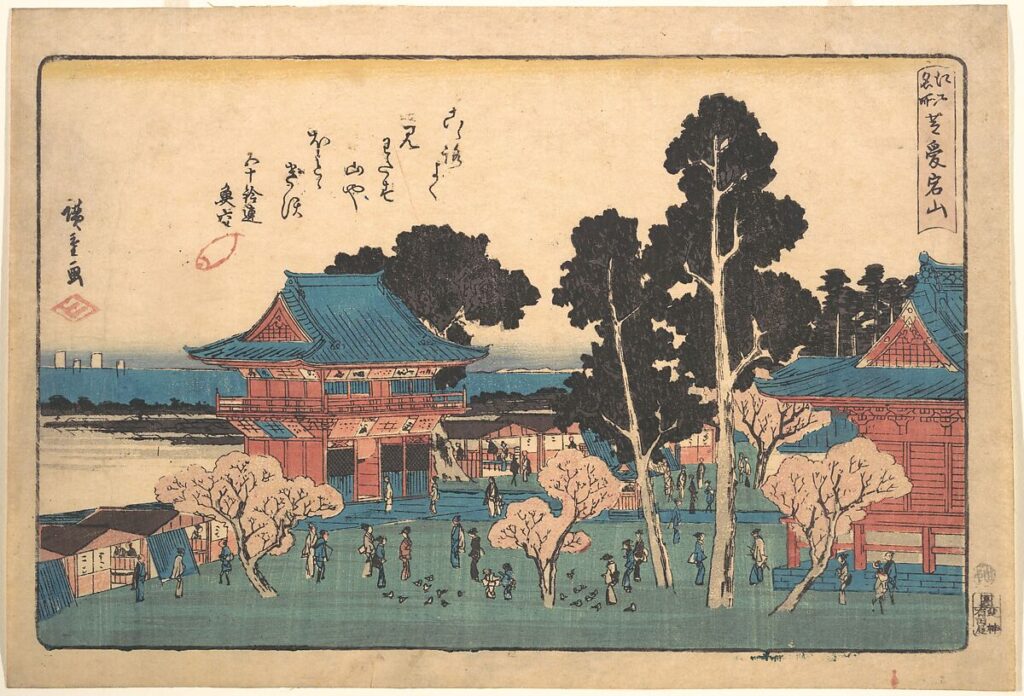
For this extra credit image, I wanted to find another example of a woodblock print with a haiku. Last semester I took the printmaking introduction course, which introduced me to woodblock and linoleum (linocut) prints. It is a tedious and time-consuming process, but worth it in the end. Seeing the art that you took the time to intricately carve out (backwards) is worthwhile and rewarding. I admire haiku poetry and traditional woodblock prints, or ukiyo-e; when they are combined, the results are incredible. The minimalist form of poetry, Haiku, and woodblock printmaking originated during the 17th century. The prints were primarily used for ads and entertainment, but also an important medium of expression for artists. These two mediums of art, poetry, and printmaking, create such an impressive way of capturing the nature of being in the present and fleeting moments (i.e. describing a bird flying, a leaf flying, someone drinking tea, enjoying simple things). This combination reveals the beauty and importance of living in the moment and appreciating the small things in life, as it incorporates a short impactful haiku poem and a pretty visual to have along with it; it truly brings out the meaning of the art piece to life. Although this art form looks so simple, it takes a lot of time, thought, and effort to create and in the end, forms a deep connection with nature and art. Many scenes depict natural life every day in Edo, Japan: like sakura trees blossoming, snowy mountains, pretty landscapes, flowers, animals, the beauty/peace nature produces, theater actors, poses of women, and a wide range of people (including middle-class citizens and samurai’s— sold at low prices to appeal to not just upper-class people), and Japanese mythology. Through these scenes, deep emotions and feelings are simplified into a small poem and captivated by the woodblock print. “Japanese woodblock prints typically featured vibrant colors and were created using multiple blocks. A master artist would create the key block, and a team of assistants would then cut a block for each color used in the print.”. The woodblock print below is by Utagawa(Ando) Hiroshige, who was born in 1797 and died in 1858. He is the son of Ando Genemon, an official firefighter and a part of the class of samurai. Instead of pursuing this occupation, he decided to create woodblock prints and was very successful with his portrayals of everyday landscapes and “Famous Places of the Eastern Capital”, which he produced under a different name (幽斎(Ichiyusai)). After the popularity of these pieces, he decided to focus his attention on post towns, travelers, Mt. Fuji, and a series called “Fifty-Three Stages on the Tokaido”. The name of the woodblock print with ink and color on the paper below is Shiba Atogayama (Mount Atago in Shiba) from the series “Famous Places in Edo” made during the Edo period (10 x 14.5 in.) in Tokyo, Japan, by Utagawa Hiroshige. This scenery is a view of Atogoyama Hill in the Shiba district of Edo, which is now Tokyo. There are temples and buildings, surrounded by people, animals, and trees. The use of color for the structures and nature/sky is visually appealing, as it is made up of light yellow and bright yellow, and blues/greens. It gives off the vibes of a soft dreamy-like perspective. In the center of this print is a large tree in the foreground, along with smaller trees and people (giving it depth and drawing the viewer to look deeper into this piece). I couldn’t find a description or analysis of this print, but this was a popular place, given it is a part of the series and the number of people there, for either locals or even tourists. It seems like an enjoyable place to walk around and admire the architecture. I am not sure what the Japanese characters say on the left and toward the center, but I am pretty sure on the right is his signature ? Regardless, this piece is still very magical on its own and I’m glad I found this 🙂
“Haiku and Ukiyo-e.” Haiku & Ukiyo-e | Museum of Art | Bates College, 15 Apr. 2010, www.bates.edu/museum/education/thousandwordproject/lesson-plans/katherine-cargile-lewiston-middle-school-haiku-and-ukiyo-e.
“Haiku and Ukiyo-e.” Haiku & Ukiyo-e | Museum of Art | Bates College, 15 Apr. 2010, www.bates.edu/museum/education/thousandwordproject/lesson-plans/katherine-cargile-lewiston-middle-school-haiku-and-ukiyo-e.
In the first pdf, Otsuki Gentaku was a Japanese scholar, who studied Dutch; at thirteen he studied medicine, the language, with Dutch physicians. He was a prominent scholar, as evidenced by A Clarification of Misunderstandings in The Stories About the Dutch in 1797 (written by a disciple), and influenced rangaku scholars. Although Japan traded with the Dutch for years, not everyone knows of them to any extent, and stereotypes and rumors have formed throughout Japan. China and Japan believe that human beings will evidently be going to heaven throughout the world. People from Holland are aging fast and mentally being forced to withstand the fact that they will need to succumb to life out on sea; those who travel the sea to come to Japan looking older than they actually are. This might be due to rough weather, running into other travelers, illnesses on board, short on food; having to learn how to survive with limited resources and an unpredictable sea, as they experience life on the sea. It is completely different from anything else. People living in Holland are like people in Japan, varying human life-spans; anyone can die at any second. People from Holland are from a different place (as they appear taller with different eyes) and have different eye shapes compared to people from Japan and therefore were seen as animals. I think that because foreigners looked so different from the Japanese and Chinese people, they were confused and scared of what other people were out there and started to make assumptions and stories as to why they appeared differently. The foreigners (europeans) also have different skin tones, but evidently everyone is the same because in the end every single person is unique in their own way (even people from different places in Japan). This passage is saying that people from different places have slight variations in appearance, but in the end everyone is created and works the same. Japan came to the conclusion that people from different “homelands” just are slightly nonidentical compared to them. Everyone has heels, so everyone is technically the same because that is the base of how humans are mobile; Hollanders are not animals, but were suspected at this time in Japan. The Dutch fermented grape wines are imported from various places; Sake or “using” is a type of Japanese grape wine. Holland has grape wine, araki, chinda, and biiro(grain wine, which you eat after food. And Dutch-made glass wine cups are koppu and containers are flasks. The Portuguese influenced name, biidoro, is an ancient name for them (holland it is garasu). It is also expected that the people from Holland eat foods just like Japan; people living inland are gifted with animals “ from heaven”, but do not eat seafood, as they are not surrounded fully by water like Japan. Hollanders are stereotyped with always smoking tobacco pipes and blowing it all out. I think that this might appear overly excessive/harsh and out of the ordinary compared to how the Japanese smoke. The Japanese used the word “violent poisons” to describe smoking tabaco, which dismisses their cultural practices and disregards the fact that not everything has to be like how the Japanese do things. In Japan there are not a lot of drastic skin tone differences, so they are racist towards black people who travel there and see them as “monkeys”. This is honestly childish at this point, they are outwardly derogatory and offensive. If they assume that all humans go to heaven, die at some point, and have the same mobility as any other human (i.e. the heels, regarding walking). This whole passage is sad and disrespectful; the “black-boys”, who are poor people from India and servants for the Dutch are described in a dehumanizing and racist nature. This feels like the Japanese do not even see them as human beings and this is incredibly stereotypical and I think that this just teaches that you need to recognize and respect diverse cultural practices and identities of everyone. I understand that the Japanese have all of these misunderstandings of foreigners, but that doesn’t take away how wrong it is for being outright racist and disrespectful.
In the second pdf, it talks about the book, “Discussing Western Painting” by Shiba Kokan in 1799. It mostly expresses his admiration for Western painting techniques and criticizes the traditional Japanese and Chinese methods for their lack of realism; he believes that Western paintings are more valuable than written descriptions, as they provide accurate and detailed information. He also thinks that the Japanese do not appreciate and that they are “extremely foolish.”, which I think is being a little excessive. I believe that everyone should respect other cultures/art styles and people’s artwork, but no one needs to go to such an extreme where they need to change their whole view on art and what they like and enjoy. There are so many different realms of art, this guy needs to chill; if he really loves Western art, then great, but stop complaining about how Japan should feel the same way that he does. I don’t know, but according to Sir George Sansom, Kokan represents a significant restlessness among educated Japanese of his time who were impressed by the material and scientific aspects of Western culture. Kokan and other people in Japan are feeling restlessness and/or dissatisfaction with traditional Japanese culture, which is kind of sad (it’s ok to want to change the art style, but this is feeling very dramaticized; this is a completely different time and a change in an art style would be very drastic, so I guess I can see why he is being so pushy about it, but just let artists do what they want to do). The author admires the Western painting techniques and really critiques the traditional Japanese and Chinese methods, which indicates a kind of impatience with Japan for not appreciating Western painting’s like he does. This is so petty; not everyone needs to condone how you think and feel about different art. He doesn’t realize that anyone can have their own opinions and personal artistic value with their own art styles. Some educated people in Japan were attracted to western culture and the material and scientific aspects of it, and weirdly criticized their own culture for being stagnant and outdated. I feel like you don’t need to be so critical with art, I think that art styles can change all the time and there’s no need to diss other styles that you peticularly don’t have an interest in at the time. There is definitely tension here between traditional Japanese culture and the new ideas and practices introduced by the West, but generally, this was interesting to see the different perspectives of Western culture in Japan during the late 18th century, during the late Tokugawa period. Pasted below is a painting by Shiba Kōkan, which is beautiful and definitely referenced and inspired by the realistic soft Western style of art. I think that as an artist, it is impressive that he was able to branch out and find inspiration from other cultures and incorporate it into his artwork, but Japan as a whole does not need to follow through with his specific ideals on how the common traditional Japanese art at this time should change. I think that it was good that he changed his art style and found a medium and aesthetic that he liked, and this easily on its own could have been an example and incentive for others to find different references and ways of expressing styles of art. (i.e. he didn’t need to expect all of Japan to accept and change their art, just because he didn’t find the traditional Japanese art style interesting to him)
Ōtsuki Gentaku. “Misunderstandings about the Dutch.” In Sources of Japanese Tradition, Vol. 2: 1600 to 2000, Part One: 1600 to 1868, compiled by Wm. Th. de Bary, Carol Gluck, and Arthur E. Tiedemann, 302-309. Introduction to Asian Civilizations. New York: Columbia Univ. Press, 2001.
Shiba Kōkan. “Discussing Western Painting.” In Sources of Japanese Tradition, Vol. 2: 1600 to 2000, Part One: 1600 to 1868, compiled by Wm. Th. de Bary, Carol Gluck, and Arthur E. Tiedemann, 310-313. Introduction to Asian Civilizations. New York: Columbia Univ. Press, 2001.
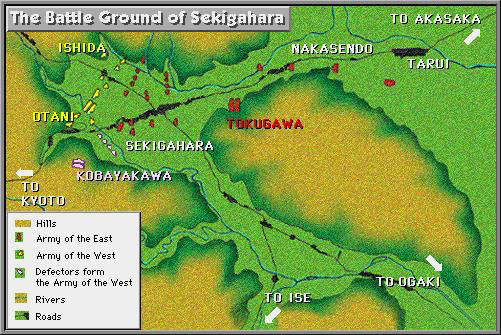
To go down this rabbit hole🕳️ 🐇, I am going to elaborate on Tokugawa Ieyasu’s crazy strict control and intimidating tactics that gained him power during a time of political instability in Japan. He was pretty intense and a tactic of his was utilized through The Battle of Sekigahara on October 21, 1600, where trained musketeers used firearms in a strategically lined formation one after the other. This battle was significant in the fact that he was able to distinguish his power as the new shogun that would unify Japan. His need for absolute power consumed him and he used powerful individuals with a strong military background, generals (like li Naomasa), and allying with notable families: Kato, Hosokawa, and Kuroda. Along with these fierce forces, Ieyasu created an “Army of the East”, with support from his Matsudaira family and a network of spies. This gave him the advantage to attack Ishida’s defenses, and as soon as Ishida found this out he retreated, which ironically was exactly what Ieyasu expected. Despite the rain all through the night, after it cleared up, he used a vanguard of musketeers that crushed the Western’s defensive line at 8 am and then at noon The Easterners were going to attack, but because of his spies, they formed an alliance with the Kobayakawa family and defeated the East. As an act of true integrity towards this battle, Otani (the commander of the South for the Westerners), split his stomach open in “the ritual manner”. Now that the Southern force was down, only Shimazu, the general, was left and he charged through the center of the Easterners forces by confusing Ieyasu by changing helmets and leading 200 troops to attack. Even so, they were still defeated (Shimazu and 80 men escaped), and Ishida, a commander, and leaders of the Westerners were captured. After this gruesome battle, Tokugawa Ieyasu became a shogun.
Tokugawa Ieyasu (1543-1616) was a retainer shōgun, who had strict control/ intimidating tactics and gained power during a time of political instability in Japan, by being chosen as one of the five to balance out the lack of a new emperor (since the son next in line was too young) and as he had tried to restore unity and order in Japan. For example on how achieved intimidating authority and control was the succession of The Battle of Sekigahara, where trained musketeers used firearms in a strategic lined formation one after the other. After this win, he banned and hid away these weapons, in order for there to be no way they can be used against him. Terrified and paranoid of assassination and loosing his power, Tokugawa retreated and hid away, essentially, to the tower of Edo Castle that he created, making it impenetrable. His design incorporated very few entry points and various waterways surrounding the inner areas; the country was made up of a network of strictly confined and lightly populated provinces (Mikawa, Tōtōmi, Suruga, Shinano, and Kai), managed and controlled by lords and samurai. This was his idea of controlling people and preventing attacks and rebels (making sure they cannot organize against him), while also restricting when and where people can go, which made it difficult to gather resources to fight back. There was also no marriages or relations with other provinces, thwarting any possibly of alliances nor time to even think about rebelling; every six months everyone in the provinces were forced to spend half of their year performing service at the palace. Each province travelled to the castle, in order to handle their affairs, in a specific way, according to their status; the wife/children stayed at Edo castle and went their separate ways from the rest of their family, having to live apart and wait for service to end. The journey to the castle consisted of various parades of samurai and people traveling back and forth ( but no matter what, there was always someone at Edo to make sure everyone was behaving and doing their tasks) and if someone tried to rebel, they would be killed, along with the wife and children waiting in the castle. Created a road and bridges network of five. Tokugawa’s rule was characterized by extreme strict control and a strong desire to maintain his power. He was worried and paranoid about assassination and rebellion, which led him to take extreme measures to prevent anyone from challenging him. While his tactics were effective in maintaining stability, they also restricted people’s freedom and prevented the development of more democratic forms of government, which had many negative effects on Japan. Although it prevented civil war and rebellion, his tactics were highly restrictive and controlling, limiting freedom and opportunities for a sense of control and meaning in people’s lives (and pursuing their own goals and career paths). This led to a lack of cultural and economic growth; the lack of social mobility and limited opportunities for people in the lower classes prompted Japan to have a slow lack of progress and contributing to the global economy, compared to other nations. The fear the Japanese felt toward Christianity is reflected in the renunciation of the Christian faith reproduced in Document 16.
Regarding incoming foreigners, who have dangerous weapons and christian faith overwhelmed Tokugawa and he forced to get rid of any sense of these things. Christians used to be okay because it was new to them, but now things became gruesome, as they were thrown in pits of fire and their ashes were scattered in the sea. Christians became very disliked and this led to murder and the sea even needed to be purified. Not all foreigners were banned (mostly christian’s); the Dutch stayed because they disliked the british and christian’s, and said they were interested in making money. One head man was appointed to be held accountable for the Dutch as a whole. They reported to the shogun in Edo once a year and everyone else has to stay on the island. During this time, no japanese were allowed off of islands to travel until the 1850’s, although things were still imported: phrase books to learn dutch, anatomy, medicine, and astronomy . The decision to close the country was set in place in order to gain stability and peace that Tokugawa sought. The prohibition of Japanese ships to trade overseas in Document 13 eliminated competition against the Dutch trade. The policy of seclusion1 (closed country) from 1633 to 1853 was mainly driven by the fear of Christianity and the desire to monopolize all the benefits from foreign trade (which the Dutch then took advantage of this by monopolizing trade).
Policy of Seclusion, or ‘sakoku’ is the Japanese term for closed country. The Japanese policy consisted of a series of directives implemented over several years during the Edo Period, or ‘Tokugawa period’ during 1603–1867, that enforced self-isolation from foreign powers in the early 17th century.Munez, Everett. “sakoku”. Encyclopedia Britannica, 18 Apr. 2023, https://www.britannica.com/topic/sakoku. Accessed 23 April 2023.
“Control of Vassals.” In David John Lu. Japan: A Documentary History, 203-208. Armonk, NY: M.E. Sharpe, 1997.
“Closing the Country.” In David John Lu. Japan: A Documentary History, 220-228. Armonk, NY: M.E. Sharpe, 1997.
“Japan Emerging: Premodern History to 1850.”, edited by Karl F. Friday. New York, NY: Routledge, 2018.
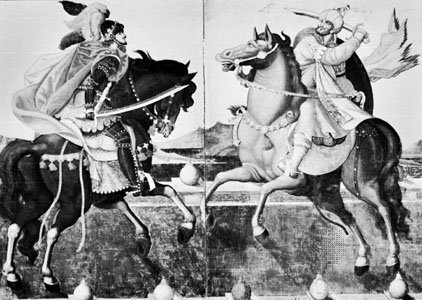
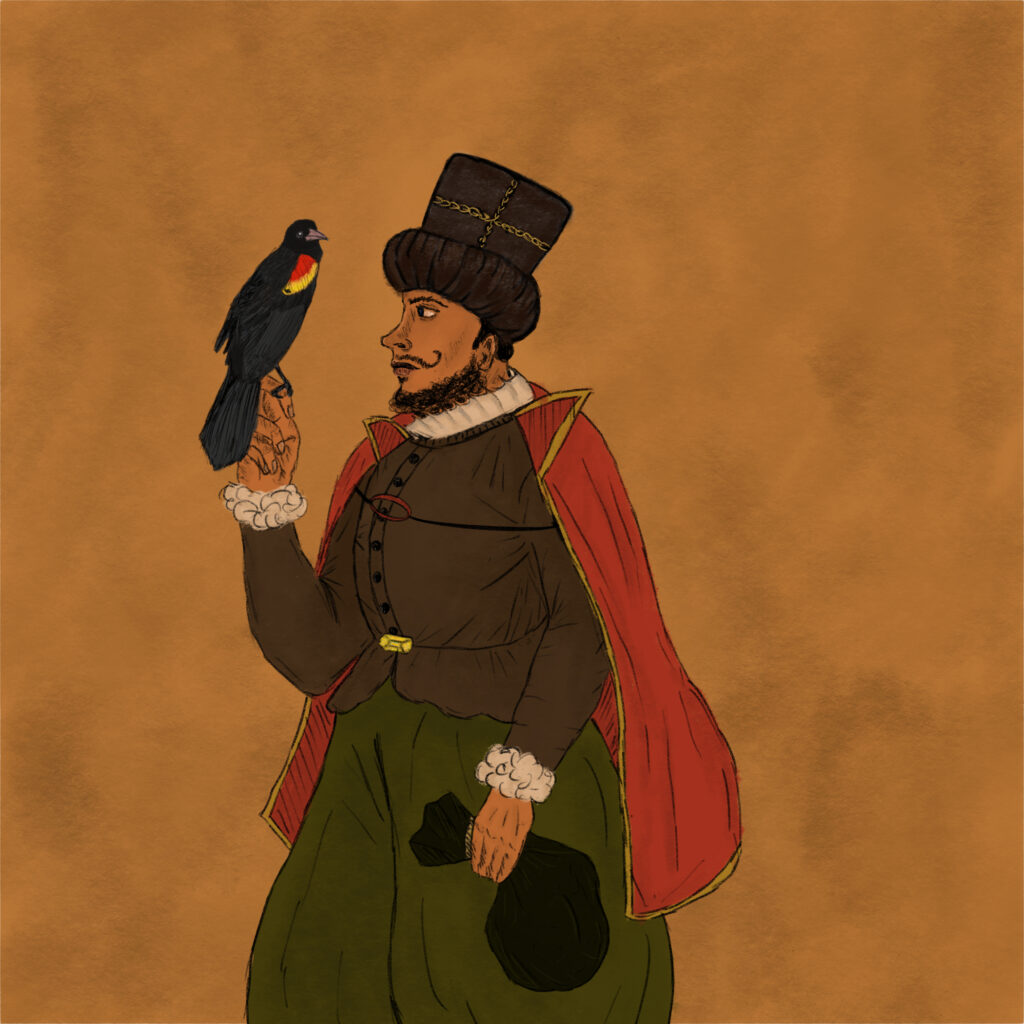
For my show and tell project I wanted to represent the stereotypical depiction of “southern barbarians”. For some context, during the 17th century, the Edict of 1635 was ordered as a law to follow. This was the closing of Japan from the rest of the world (meaning, no one can leave nor enter) and this edict had an exception for Dutch and Chinese traders (until 1853). This policy of seclusion was prompted by the fear and misunderstanding of the spread of Christianity, which was an act of desire for the monopolization of foreign trade and a gruesome act against Christians. There was also another law, Completion of the Exclusion in 1639, which Tokugawa then excluded foreign influences from Japan to preserve their culture/political stability. The Fate of the Embassy from Macoa in 1640 by Antonio Cardin S.J. was sent by the Portuguese, in hope of regaining the ability to trade (the representatives were all put to death), which just further presents the aggressive fear Tokugawa felt towards Christians and the terrifying force and power he is willing to use to prevent them from entering Japan. During the time of foreign trade, there were traditional Japanese art pieces, defined as Nanban, or “southern foreigners”, that depict the way the Japanese viewed the foreigners. Many of these artworks are extremely stereotypical, with physical features: mustaches, small beards, long noses, hats, ruffles, and large pants. There was also an exaggeration of height, wearing capes, or having “exotic” creatures i.e. birds, elephants, peacocks, tigers, etc. I recreated this portrayal of the foreigners by including all of these features shown above. I chose to draw a man with baggy clothing, ruffles, a cape and hat, facial hair, a long nose, and a bird.
Hoakley. “From Silk to Canvas: 2 Saints and Namban Screens.” The Eclectic Light Company, 18 Aug. 2015, https://eclecticlight.co/2015/08/18/from-silk-to-canvas-2-saints-and-namban-screens/.
“Closing the Country.” In David John Lu. Japan: A Documentary History, 220-228. Armonk, NY: M.E. Sharpe, 1997.
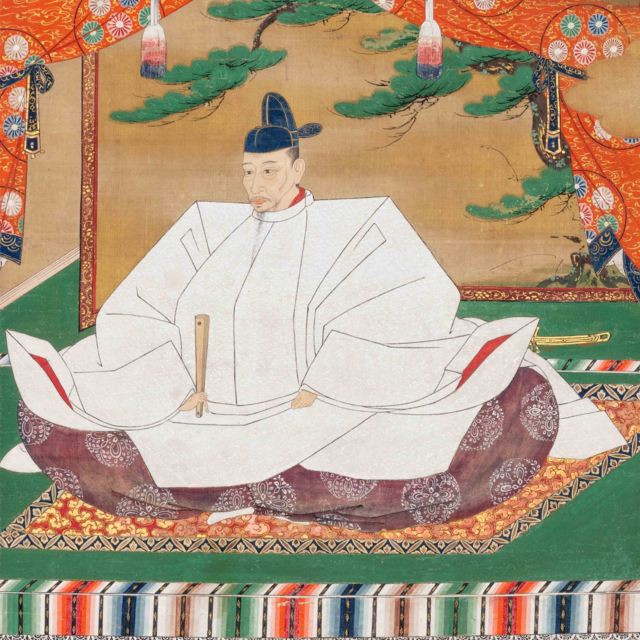
Hideyoshi is a powerful warlord in Japan during the late 16th century and received a Korean embassy in Kyoto on December 3, 1590. They presented him with a letter of state congratulating him on having unified Japan. But, he then responded to the letter (very arrogant) implying that the Korean delegates had brought him a message of submission from their ruler, even though it was a message of congratulations. The delegates objected to his tributes, but their complaints were brushed under the rug. Hideyoshi announced his plan to invade Ming China, Korea’s suzerain, and also hinted that Korea was expected to play a significant part. Hideyoshi used legends to mystify his origins, like he is some kind of transcendency mighty lineage). He also expressed his desire to spread his fame throughout the ‘Three Countries’ – Japan, China, and India. Hideyoshi said that he wants to invade the Great Ming and introduce Japanese customs and values to the provinces of that country (basically having imperial rule and culture for years and years). He also warned that people who don’t offer homage would not be granted pardon (even if they were from islands in the sea). He said that his mother had dreamt that the wheel of the sun had entered her womb at the time of his conception and now, (because of this miracle) anyone who turned against him was automatically doomed. He never lost battles, and wherever he attacked, he always conquered. He claimed that he had conquered the rebels and took down the bandits within the span of three-four years, which made everyone calmer. The citizens lived well and wealth produced by the land increased. Hideyoshi’s response to the Korean delegates led him to bragging about his achievements/ambitions and intimidated them of his military strength. You see how arrogant he is and how he just disregards diplomatic respect.
There are descriptions of traumatic experiences of a person and their family during the Japanese invasion of Korea in the late 16th century. The father had a boat (hoping to find and use it to escape from the Japanese ships), but they were discovered and captured. They all jumped into the sea in an attempt to escape, but were caught and tied up by the Japanese. The family lost their father, the spirit tablets of their deceased mother and eldest brother, and their children. I think this was to describe the trauma and loss experienced by the Korean community, during the Japanese invasion. The family was not alone in their suffering, as dead bodies were piled high on the coast in all directions. The way this is written, you can see the despair from the loss of life; “What was life; for what crime were people dying?” Fate and destiny are intertwined within this writing as well; everything in life is destined even if you don’t know that. The dream of a dragon child led to the naming of their son “Dragon”, interestingly expresses the belief in Korean culture that dreams can foretell the future, but the son’s drowning shows that even with the belief in destiny, you can still be affected by fate. This really describes the trauma and devastation experienced by the Korean people during the Japanese invasion very well, and fate and destiny , their cultural beliefs of the time. This was also about a Korean family captured by the Japanese; the family was separated, with the legal wives being taken onto a Japanese ship and the remaining members being placed on separate boats. They are hungry, mistreated, and there were many deaths during this captivity. I found it intriguing the resilience of the family, as they survived for nine days without food and extreme hardship. There is also a lot of poetry expressing the emotions of the narrator. The author uses this to show grief/sorrow over the loss of family members and the suffering that they endure. I think this allows him to process his emotions and make sense of his experiences. It explains the brutality of war and the toll that it takes on innocent civilians. The family was mistreated and abused by their captors, and several members were killed or died as a result of the captivity, so it shows the human cost of conflict and the need for peace and understanding between nations. This was a vivid and emotional telling of the experiences of a Korean family during a time of war and captivity, which is a powerful reminder of the strength of the human spirit and how we need compassion/empathy when we are in suffering.
Oda Nobunaga. “Letter to the King of Korea”. In Sources of Japanese Tradition, Vol. 1: From Earliest Times to 1600, compiled by Wm. Th. de Bary, Donald Keene, George Tanabe, and Paul Varley, 465-67. Second edition. Introduction to Asian Civilizations. New York: Columbia Univ. Press, 2001.
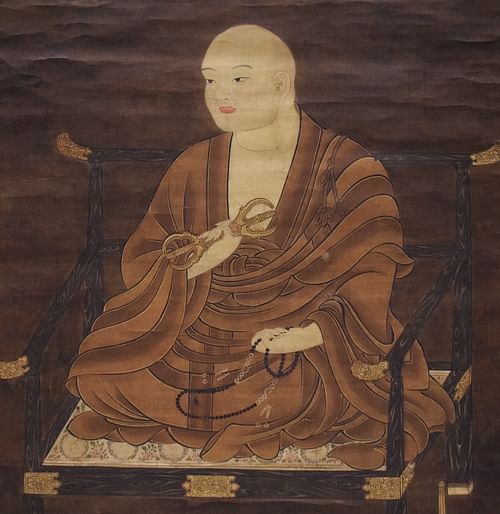
I really enjoyed reading about Zen. It brings one to realize the importance of the attainment of enlightenment through meditation and interaction with a Zen teacher. Zen originated from the Sanskrit word ‘dhyana’ or meditation, and it is the Japanese term of the Chinese Ch’an, which is a blend of Buddhism and Daoist naturalism. The practice is culturally significant in the West and influenced the traditional arts in Japan. Zen was developed in China by teachers: Hongren and Shenziu, who believed that sudden enlightenment was brought about with enigmatic stories and questions, or koans. The persecution of Buddhism by the Tang Dynasty in 845 led to the destruction of many great monasteries, but Ch’an was disregarded. As a result, monastic Buddhism in China and priesthood was almost entirely Ch’an, although popular religion favored ‘Pure Land Buddhism’. In the 12th and 13th centuries, Ch’an was introduced as Zen Buddhism in Japan, during the Kamakura era. Eisai went to China to bring back the Rinzai school of Zen and Dogen did the same for the Soto school. Rinzai taught intense interaction between roshi and disciple, using a lot of koans, while Soto taught a quieter type of Zen, where realization is attained little by little doing zazen and daily work. The Ashikaga or Muromachi period was the golden age of Zen in Japan. Under support by the shoguns of the Ashikaga house, Zen architecture, gardens, flower arrangement, the ‘tea ceremony’, and Noh plays, flourished. Zen’s monastic discipline and its art appealed to many warriors, who needed to prepare to face death in battle. Martial arts like kendo, the ‘way of the sword’, and Zen’s kind of indifference to life or death and its focus on the present moment (where you have to act spontaneously, without overthinking) became popular. The foundational Zen practice is zazen, or ‘sitting meditation’. Traditionally, it is done in the ‘lotus posture’, with your legs crossed, each foot on the opposite thigh, your back and head erect, and eyes focused ahead; the breathing needs to be slow and deep. In the Rinzai tradition, someome learning has to hold a koan in their mind during the zazen, and later needs to explain the meaning of the koan to the roshi, not by actually saying an explanation, but through a gesture/cry showing that they’re a part of the universe in some way. Zen is a form of Buddhism originated in China and is a combination of Buddhist ideals (monastic discipline and enlightenment) and Daoist naturalism. Zen is the attainment of enlightenment through meditation, focusing on being in the present moment, naturalness of medium and movement, harmony with nature, and simplicity. I also found the Ryōanji rock garden so beautiful. I admire how strong the earthen wall is, as it withstands all the seasons and weather, with just being made up of rapeseed oil and clay. The amount of thought that was needed to have the specific perspective, small incline, and intricate and detailed placement of the stones amazes me (and the way that it’s all a mystery who came up with these ideas). It would be really cool if it was designed to read as a koan and I wouldn’t be surprised if a lot of people meditated there. The additional material also peaked my interest, in particular the concepts of “wabi” and “sabi.” Wabi considers beauty as threefold: simple beauty, unpretentious beauty, and austere beauty. I found this interesting because when talking about Buddhism and Zen, the idea of beauty is never really explored (it’s primary focus “enlightenment”). “Wabi” compared to “sabi” also interested me; “sabi” is defined as loneliness in an aesthetic sense. At first this concept did not make sense, but I think it is how on the path to enlightenment is solitary and personal. It seemed to me before to the reading that aesthetics and beauty are antithetical to Buddhism, because I was under the assumption that material goods and the material world should be discarded when attempting to reach enlightenment. Zen Buddhism embraces beauty— and distinguishes beauty into different sects.
The Kenmu Code is a set of laws set in place in Japan in the 14th century during the Kenmu Restoration by the emperor to restore imperial rule, as there was political turmoil and the government was unstable. The reading consists of Articles 1 through 17 of the Kenmu Code. Articles 1 and 2 of the Kenmu Code establish the position of the emperor as the highest authority in the land and prohibit any attempts to undermine his authority. Article 3 sets out the duties of the shogun, who is responsible for defending the country and carrying out the emperor’s orders. Articles 4 through 7 address the appointment of government officials and their duties. The code establishes a system of appointments based on merit, rather than social status or political connections. Officials are expected to be honest, hardworking, and loyal to the emperor. Article 8 sets out the rules for the military, requiring soldiers to be disciplined and obedient, and to follow the orders of their superiors. Article 9 prohibits the carrying of weapons by anyone other than authorized military personnel. Articles 10 through 14 deal with the administration of justice, including the appointment of judges and the rules for conducting trials. The code emphasizes the importance of fairness and impartiality in the administration of justice. Articles 15 through 17 address taxation and the collection of revenue. The system of taxation is based on the amount of land owned by individuals, and requires the government to use tax revenue to support the military and maintain public works. Articles 1 through 17 of the Kenmu Code set out the basic principles for a stable and effective government and insist on the importance of loyalty to the emperor, fair administration of justice, and responsible use of public resources. These codes reveal the state of affairs in the capital at that time, as they reflect the political, economic, and social changes brought about by the restoration. It highlights the importance of loyalty to the emperor, the need to maintain social order, and the protection of private property. In comparison though, the Seventeen Article “constitution” of Prince Shotoku, written in the 7th century, focused more on moral and ethical principles that should guide rulers and their subjects. It significantly explains the importance of having benevolence, justice, and harmony, and having rulers to act in the best interest of their people. It reflects the ideals from Buddhism and Confucianism, as it mentions education and the pursuit of knowledge, which is key in life. I feel like the Kenmu codes focus more on specific legal issues, while the Seventeen Article “constitution” was more philosophical and aimed to provide a sense of structure for rulers. Similarly, I think they both have give insight into the values and beliefs of the eras they were written in.
“The Kenmu Code.” In Sources of Japanese Tradition, Vol. 1: From Earliest Times to 1600, compiled by Wm. Th. de Bary, Donald Keene, George Tanabe, and Paul Varley, 419-420. Second edition. Introduction to Asian Civilizations. New York: Columbia Univ. Press, 2001.
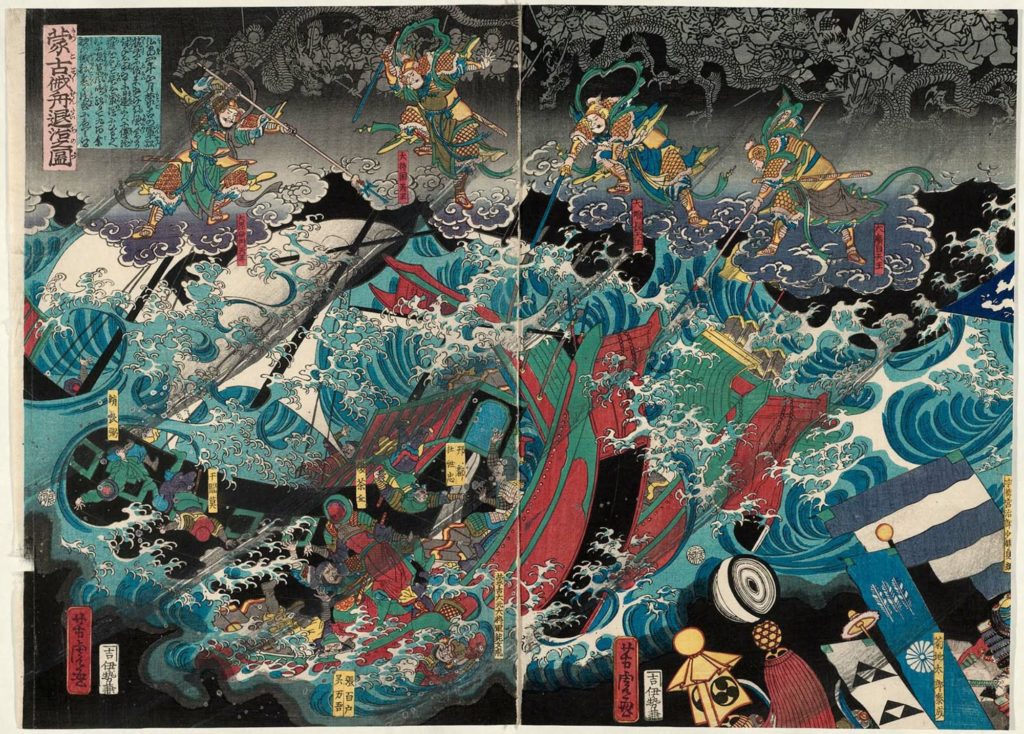
With the first reading this week, we learned about the Mongol invasions of Japan in the 13th century. This has become very influential because of divine intervention in the form of “kamikaze” (divine winds that saved Japan from defeat). It’s revealed through modern scholarship that the invasions are over-exaggerated and mythologized as time went on. Although the Mongols succeeded in logistical winnings: crossing the ocean from Korea and the Chinese mainland, their invasion forces were likely much smaller than commonly believed and there was no divine intervention. The Japanese warriors were able to hold their own against the Mongols in the battles but the Kubilai Khan’s desire and motivation to conquer Japan is still unclear; the historical reality of these invasions gives you a look into the military capabilities of both the Mongols and the Japanese at the time.The Mongol Empire, which once controlled most of Asia, had designs on Japan. Diplomatic records show that Kublai Khan (the Great Khan) attempted to establish relations with Japan, but Japan refused to respond to the Khan’s overtures. This allowed Kublai to establish control over Korea, the neighboring country. Japan considered Korea an automatic ally, as the two countries shared many similarities, like their military strength. However, the Mongols managed to impose their diplomatic objectives on Korean officials, which prevented Korea from acting with any autonomy. After crushing the Korean rebellion, Kublai ordered an invasion of Japan, but Japan’s warriors were able to repel the Mongol forces. Japan’s ability to resist the Mongols was due to many factors: superior naval technology, weather, and the willingness of Japan’s samurai to die in battle.The size of the armies involved in the invasions of Japan by the Mongols in 1274 and 1281 is not accurately known (there are no official records of the composition of the Japanese forces). Chroniclers of this time were dramatic with the numbers and gave unreliable estimates. Scholars tried to come up with reliable estimates based on surviving administrative documents, like the duty reports and guard duty registers. They range from 2,300 to 6,000 Japanese warriors fighting against the Mongols. Guard duty registers say that only a small number of gokenin (housemen) were mobilized from each province, and few were accompanied by more than five men. The ruling strata of Kyushu and their immediate retainers is estimated to consist of around 750 men. Evidently, a full force of two to three thousand Japanese defenders is more ideal than an army of five thousand troops because of how well coordinated and tactful they were. Mongol estimates of Japanese forces as consisting of 102,000 men are considered to be exaggerated, and it is likely that only two to three thousand Japanese defenders fought against a similar number of Mongols in 1274. The need for mobilizing an army and building an extensive wall in Kamakura made the tensions worse within Japanese society. This crisis revealed an opportunity to advance and it led to some generals and provincial constables to ignore the commands of their family ‘chieftains’. The 1281 Mongol invasions also created an increase in anti-foreign sentiment, and the defenders’ desire for revenge were also increased by the occupation of the outlying islands. The Japanese desired to punish those who they had perceived as aggressors rather than choosing to attack all foreigners (which is better) but personal and familial goals caused them to risk their lives in battle instead of fighting to defend Japan. These actions weren’t strong/widespread enough to be very impactful with trade that continued between Japan, Koryo, and the rest of the Asian continent throughout much of the Yuan era.
I really enjoyed looking at the updated scrolls of the Mongol invasion in different time periods and how it changed to be in a different order. Mongol Empire invasions were motivated by the need to conquer Japan in 1274 and 1281. The scrolls available at the Princeton University Digital Library provide artistic insight into these events. It shows scenes from the Mongol invasions, including battle scenes, Mongol and Japanese soldiers, and illustrations of weapons, armor, and horses. I found it interesting how these scrolls have very vivid detail with the weapons (bows/swords), armor, gore, distinctive clothing, and headgear with little flaps (which I assume would protect against the sun and weather). The Japanese soldiers have more of a traditional type of samurai armor and swords/spears. I liked the battles on the sea, especially the one from the 19th century. The scrolls show both sides engaging in intense naval battles, with ships firing arrows and soldiers boarding the enemy vessels. With the scrolls, you are able to visualize the tactics and strategies used by the Japanese in defending against the Mongol invasions. The “kamikaze” tactic involved crashing their ships into the enemy vessels, which successfully disrupted the Mongol invasion and forced them to retreat👍Overall, these scrolls give a good glimpse into the battles and naval fights that had taken place during the late 13th century.
Conlan, Thomas. In Little Need of Divine Intervention: Takezaki Suenaga’s Scrolls of the Mongol Invasions of Japan. Cornell East Asia Series, 113. Ithaca, N.Y.: East Asia Program, Cornell University, 2001.
“The Mongol Scrolls”. In Sources of Japanese Tradition, Vol. 1: From Earliest Times to 1600, compiled by Wm. Th. de Bary, Donald Keene, George Tanabe, and Paul Varley, 282-83. Second edition. Introduction to Asian Civilizations. New York: Columbia Univ. Press, 2001.