

I really enjoyed reading about Zen. It brings one to realize the importance of the attainment of enlightenment through meditation and interaction with a Zen teacher. Zen originated from the Sanskrit word ‘dhyana’ or meditation, and it is the Japanese term of the Chinese Ch’an, which is a blend of Buddhism and Daoist naturalism. The practice is culturally significant in the West and influenced the traditional arts in Japan. Zen was developed in China by teachers: Hongren and Shenziu, who believed that sudden enlightenment was brought about with enigmatic stories and questions, or koans. The persecution of Buddhism by the Tang Dynasty in 845 led to the destruction of many great monasteries, but Ch’an was disregarded. As a result, monastic Buddhism in China and priesthood was almost entirely Ch’an, although popular religion favored ‘Pure Land Buddhism’. In the 12th and 13th centuries, Ch’an was introduced as Zen Buddhism in Japan, during the Kamakura era. Eisai went to China to bring back the Rinzai school of Zen and Dogen did the same for the Soto school. Rinzai taught intense interaction between roshi and disciple, using a lot of koans, while Soto taught a quieter type of Zen, where realization is attained little by little doing zazen and daily work. The Ashikaga or Muromachi period was the golden age of Zen in Japan. Under support by the shoguns of the Ashikaga house, Zen architecture, gardens, flower arrangement, the ‘tea ceremony’, and Noh plays, flourished. Zen’s monastic discipline and its art appealed to many warriors, who needed to prepare to face death in battle. Martial arts like kendo, the ‘way of the sword’, and Zen’s kind of indifference to life or death and its focus on the present moment (where you have to act spontaneously, without overthinking) became popular. The foundational Zen practice is zazen, or ‘sitting meditation’. Traditionally, it is done in the ‘lotus posture’, with your legs crossed, each foot on the opposite thigh, your back and head erect, and eyes focused ahead; the breathing needs to be slow and deep. In the Rinzai tradition, someome learning has to hold a koan in their mind during the zazen, and later needs to explain the meaning of the koan to the roshi, not by actually saying an explanation, but through a gesture/cry showing that they’re a part of the universe in some way. Zen is a form of Buddhism originated in China and is a combination of Buddhist ideals (monastic discipline and enlightenment) and Daoist naturalism. Zen is the attainment of enlightenment through meditation, focusing on being in the present moment, naturalness of medium and movement, harmony with nature, and simplicity. I also found the Ryōanji rock garden so beautiful. I admire how strong the earthen wall is, as it withstands all the seasons and weather, with just being made up of rapeseed oil and clay. The amount of thought that was needed to have the specific perspective, small incline, and intricate and detailed placement of the stones amazes me (and the way that it’s all a mystery who came up with these ideas). It would be really cool if it was designed to read as a koan and I wouldn’t be surprised if a lot of people meditated there. The additional material also peaked my interest, in particular the concepts of “wabi” and “sabi.” Wabi considers beauty as threefold: simple beauty, unpretentious beauty, and austere beauty. I found this interesting because when talking about Buddhism and Zen, the idea of beauty is never really explored (it’s primary focus “enlightenment”). “Wabi” compared to “sabi” also interested me; “sabi” is defined as loneliness in an aesthetic sense. At first this concept did not make sense, but I think it is how on the path to enlightenment is solitary and personal. It seemed to me before to the reading that aesthetics and beauty are antithetical to Buddhism, because I was under the assumption that material goods and the material world should be discarded when attempting to reach enlightenment. Zen Buddhism embraces beauty— and distinguishes beauty into different sects.
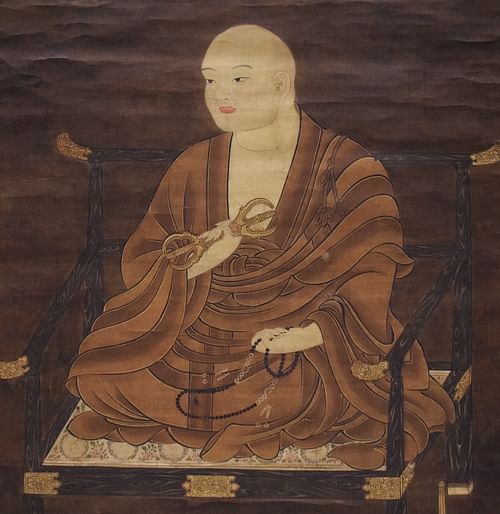
Ellwood, Robert, and Ellwood. “Zen Buddhism.” In Encyclopedia of Global Religions, by Wade Roof, and Mark Juergensmeyer. Sage Publications, 2011.
https://docs.google.com/document/d/10nb8SsHNLh-E2xdBi49A9DDudSoj8Bdaypmgfhdg5vc/edit?usp=share_link

